Quick answer: In 2026, Emirates immigration authorities use AI across four layers of visa processing — automated document and biometric verification, AI-based work permit screening (launched May 2026 by ICP and MOHRE) tied to real-time Wage Protection System checks, Smart Gate biometric entry at airports, and an AI-driven Golden Visa renewal platform. The airport layer alone cleared over 9.4 million travellers in the first half of 2026, cutting immigration transaction time to roughly 3.4 seconds, down from over 12 seconds previously. AI speeds up genuine, well-documented applications — it does not lower the bar for approval, and small documentation errors are still the leading cause of Emirates visa delay or rejection.
Verified against ICP Smart Services, GDRFA Dubai, and MOHRE public updates — July 2026.
Table of ContentsWhat's actually changed in 2026
Earlier "digital" visa processing mostly meant online forms and e-visas delivered by email instead of a passport stamp. What's new in 2026 is that AI now sits inside the decision layer itself — cross-checking applicant data against government databases, flagging inconsistencies for human review, and screening applications for risk before a caseworker ever opens the file.
This shift is the first major deliverable under the UAE government's broader Agentic AI operations framework, unveiled earlier in 2026 by Sheikh Mohammed bin Rashid Al Maktoum as part of a wider push to embed AI into public-sector decision-making. Visa and immigration processing is simply the most visible, highest-volume place that framework has landed so far.
This matters most in four places: work permit screening, airport entry, tourist visa turnaround times, and — newer still — Golden Visa renewals.
AI work permit screening (ICP + MOHRE)
Since May 2026, the Federal Authority for Identity, Citizenship, Customs & Port Security (ICP) — working with the Ministry of Human Resources and Emiratisation (MOHRE) — has used an AI and robotics-based system to screen work permit applicants. The platform analyses an applicant's skills, education, and experience against live labour-market data, generating an eligibility score in seconds and flagging cases that need human review, rather than approving or rejecting outright.
The employer-side detail most applicants miss: permit issuance is now checked in real time against a company's Wage Protection System (WPS) compliance. Employers with unresolved WPS violations face a freeze on all new permit issuance — not just the filing tied to the flagged case. If you're joining a new employer, it's worth asking whether their WPS record is clean before you count on a fast approval; the delay may have nothing to do with your own documents.
Regulators are also expected to issue a ministerial resolution clarifying how the AI weighs individual factors and what appeal routes exist for applicants who are flagged incorrectly — see the appeals section below.
If you're applying for a Dubai work visa, this doesn't change your document requirements — but it does mean incomplete MOHRE labour approval filings, mismatched employer records, or WPS violations on the employer's side get flagged faster than before.
Smart Gates and the Red Carpet corridor
The most visible result of AI investment is at the airport. According to the General Directorate of Residency and Foreigners Affairs (GDRFA), Dubai's Smart Gates and the contactless "Red Carpet" biometric corridor processed more than 9.4 million travellers in the first half of 2026 — over 9 million through standard biometric Smart Gates and roughly 439,000 through the fully paperless Red Carpet channel.
Continuous-motion facial and iris recognition brought the average immigration transaction down to about 3.4 seconds, a sharp cut from the previous baseline of over 12 seconds. No physical passport, printed visa, or boarding pass is needed at the gate for eligible travellers.
What this means for you: if you already hold a valid e-visa and your biometrics are on file, expect a noticeably faster arrival experience than in previous years — shorter queues and less manual document handling.
Faster tourist visa approvals
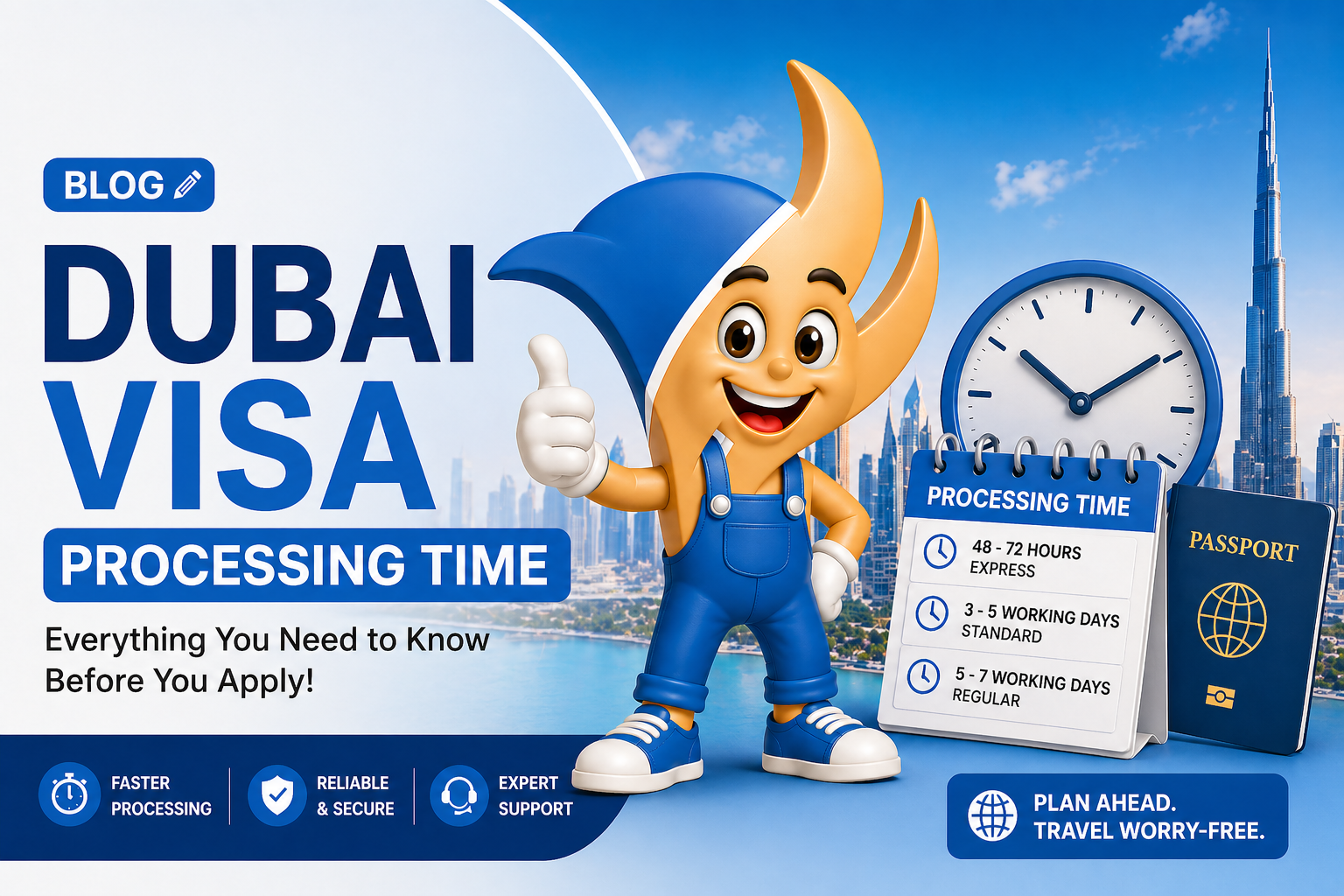
AI-assisted document verification has also compressed tourist visa turnaround. Before this shift, standard tourist visa approvals commonly took 3–5 working days; multiple 2026 reports now point to Dubai tourist visa approvals regularly completed in under 48 hours for standard applications with complete documentation — consistent with the 2 to 5 working day standard processing window most applicants still see once nationality-specific checks are factored in.
First-time applicants from certain nationalities may still see 1–2 extra working days for a one-time background check — this is a clearance step, not a rejection signal. High-volume applicant pools (Indian nationals, for example, file more than 5 million UAE visa applications a year) mean automated systems are tuned to filter more strictly at scale, which improves security but can occasionally add friction versus a smaller applicant pool.
AI-driven Golden Visa renewals
Separately from new-applicant screening, GDRFA Dubai has rolled out an AI-driven platform specifically for Golden Visa renewals, capable of completing renewals in minutes rather than days for existing holders. This is a distinct system from the ICP/MOHRE work-permit screening above — it applies to renewal of an existing 10-year residence permit, not new applications.
The Golden Visa program itself saw eligibility changes in 2026 (a raised property threshold and new professional categories including AI specialists), but the renewal process for existing holders is now largely automated at the data-matching stage, with human review reserved for cases involving a change in circumstances. See our Golden Visa guide for full 2026 eligibility details.
New visa categories tied to the AI push
2026 also brought four new purpose-built visit visa categories from the ICP: AI specialists, entertainment, events, and maritime tourism — moving away from a one-size-fits-all tourist visa toward permits matched to actual travel purpose. If you're travelling for an AI conference, production shoot, or major event, check whether one of these fits better than a standard tourist visa.
Visa-on-arrival eligibility has also expanded this year for holders of qualifying residence permits from additional nationalities — see our Dubai visa on arrival guide for the current list.
What AI does not fix
Faster processing is not the same as easier processing. Automated cross-checking makes small errors — a mismatched name spelling, a cropped passport scan, an unresolved old visa record — more likely to get flagged, not less. Machine review is consistent, but it isn't forgiving of sloppy documentation.
The leading causes of delay or visa rejection in 2026 are unchanged by AI adoption:
- Name or date mismatches between the application and passport bio page
- Blurred or cropped document scans
- Applying under the wrong visa category for the travel purpose
- Unresolved previous UAE visa records, overstays, or unpaid fines
- Insufficient proof of funds or return intent
- On the employer side: unresolved WPS violations, which can freeze permit issuance company-wide
Since the 10-day overstay grace period was removed on 11 February 2026, Smart Gates now also flag unpaid overstay fines automatically at departure — settle these before travelling to avoid boarding delays.
What happens if the AI flags you — appeals and recourse
A flagged application isn't a rejection — it's a routing decision. Cases the AI system can't confidently clear on its own are sent to a human officer for manual review, which adds time but doesn't automatically mean refusal.
Because the work-permit screening system is new, its full appeal and transparency framework is still being finalised: authorities have said the platform complies with the UAE's Personal Data Protection Law (PDPL), and a forthcoming ministerial resolution is expected to set out formal appeal procedures and clarify how individual factors are weighted. Until that resolution is published, the practical path if you're flagged is the same as it was pre-AI — contact the sponsoring employer's PRO or a licensed visa service to query the hold and supply any missing documentation, rather than waiting passively.
For employers: mobility teams are advised to audit document workflows and standardise job-code mappings now, since mismatched or non-standard job codes are a common trigger for manual review under the new scoring system.

 TOURIST VISA